As We Enter the Height of Hurricane Season: 5 Tips on Preparing for Hurricanes and Protecting Your Home
- Savvi

- Sep 9, 2025
- 5 min read

With hurricane season reaching its peak intensity and meteorologists forecasting above-average storm activity this year, the time for preparation is now. Hurricane season officially runs from June through November, but early September through October typically bring the most powerful and destructive storms. These weather events can cause devastating property damage, flooding, and extended power outages that leave families vulnerable and homes exposed to further damage.
Effective hurricane preparation isn't just about weathering the storm: it's about taking proactive steps that minimize risk, protect your most valuable assets, and ensure your family's safety. The key lies in comprehensive planning that addresses every aspect of storm preparation, from monitoring weather patterns to securing your property and reviewing your coverage options.
1. Stay Informed Through Reliable Weather Monitoring
Your first line of defense against hurricane damage begins with staying consistently informed about developing weather patterns and potential threats. The National Hurricane Center provides the most accurate and up-to-date forecasts, while local emergency management agencies offer region-specific guidance tailored to your area's unique risks and evacuation procedures.
Modern technology offers unprecedented access to real-time weather data. Download official weather apps from trusted sources like the National Weather Service, and enable push notifications for severe weather alerts in your area. Many apps now provide detailed storm tracking capabilities, showing projected paths, wind speeds, and estimated arrival times.

Sign up for your local government's emergency alert system, which delivers critical information via text message, email, or automated phone calls. These systems often provide evacuation orders, shelter locations, and emergency service updates that aren't available through general weather apps.
Beyond digital monitoring, maintain access to battery-powered or hand-crank radios. During extended power outages, these devices become essential lifelines to emergency information and updates from local authorities.
2. Build a Comprehensive Emergency Supply Kit
A well-stocked emergency kit forms the foundation of hurricane preparedness, providing essential supplies when normal services become unavailable. Your kit should sustain your household for at least seven days, as emergency services may be delayed following severe storms.
Water represents your most critical need: store one gallon per person per day for drinking, cooking, and basic hygiene. Non-perishable food items should include canned goods, energy bars, dried fruits, and ready-to-eat meals that require no cooking or refrigeration.
Essential supplies extend beyond food and water. Your emergency kit should include:
Flashlights with extra batteries and backup power sources
First-aid supplies and prescription medications in original containers
Important documents stored in waterproof containers (insurance policies, identification, bank records, emergency contact lists)
Cash in small bills, as ATMs and card readers may be unavailable
Personal hygiene items and sanitation supplies
Supplies for infants, elderly family members, or pets
Tools like manual can openers, multi-tools, and duct tape

Consider creating multiple emergency kits: one for your home, one for your vehicle, and portable "go bags" for each family member. This redundancy ensures you're prepared whether you shelter in place or need to evacuate quickly.
3. Protect Your Home's Physical Structure
Proactive home protection measures can significantly reduce hurricane damage and prevent minor issues from becoming major problems. Begin your preparations well before any storm threatens your area, as supplies become scarce and contractors become unavailable as storms approach.
Start with your property's perimeter. Trim tree branches that overhang your roof or could fall onto your home during high winds. Remove dead or diseased trees entirely, as these pose the greatest risk during storms. Clean gutters and downspouts thoroughly to ensure proper water drainage, and inspect your roof for loose or damaged shingles that could allow water infiltration.
Window and door protection requires special attention. Install storm shutters or prepare plywood covers cut to fit each opening. Reinforce garage doors, as these large openings often fail first during high winds, creating internal pressure that can cause roof damage.
Secure outdoor furniture, decorations, and equipment that could become dangerous projectiles. Move items indoors when possible, or anchor them securely to prevent wind damage. Inspect and secure any detached structures like sheds, gazebos, or pool enclosures.
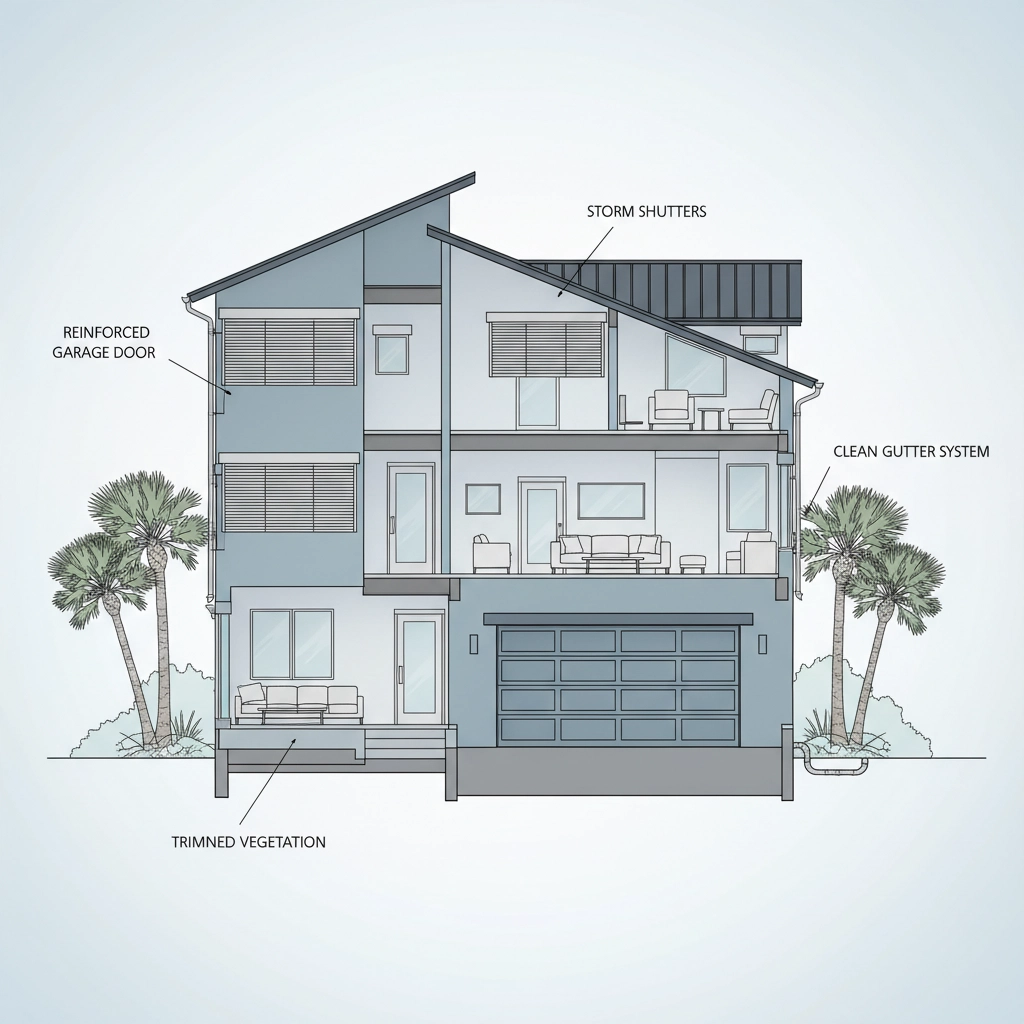
Consider installing sewer backflow valves to prevent sewage backup during flooding, and anchor fuel tanks or generators to prevent them from floating or shifting during storm surge events.
4. Review and Update Your Insurance Coverage
Insurance coverage review represents one of your most important hurricane preparation steps, yet many homeowners discover coverage gaps only after damage occurs. Understanding your policy's specific provisions before a storm approaches allows you to make informed decisions about additional coverage or protection measures.
Standard homeowners insurance typically covers wind damage from hurricanes, but flood damage requires separate coverage through the National Flood Insurance Program or private insurers. Flood insurance includes a 30-day waiting period before coverage begins, making advance planning essential.
Review your policy's dwelling coverage limits to ensure they reflect current construction costs in your area. Hurricane damage often occurs during periods of high demand for contractors and materials, driving up repair costs significantly above normal pricing.
Document your belongings through photographs or video recordings, storing these records in cloud storage or off-site locations. This documentation accelerates claims processing and helps ensure you receive appropriate compensation for damaged items.
Consider additional living expense coverage, which pays for temporary housing, meals, and other costs if your home becomes uninhabitable. This coverage becomes invaluable when dealing with extended repair periods following major storms.
5. Create and Practice Your Evacuation Plan
Evacuation planning requires careful consideration of multiple scenarios and clear communication with all family members. Develop primary and alternate evacuation routes, as initial routes may become impassable due to flooding, debris, or heavy traffic.
Identify evacuation destinations in advance, whether staying with family, friends, or in designated shelters. Research pet-friendly accommodations if necessary, as many shelters don't accept animals. Book accommodations early when storms threaten, as availability becomes limited quickly.

Practice your evacuation plan with all family members, ensuring everyone understands their roles and responsibilities. Establish communication procedures for staying in touch if family members become separated, and designate an out-of-state contact person who can coordinate information.
Prepare your vehicle for evacuation by keeping fuel tanks full during hurricane season and maintaining emergency supplies in your car. Include maps and written directions, as GPS systems may become unreliable during emergencies.
Time your evacuation appropriately: leaving too early may be unnecessary, but waiting too long can put you in danger. Monitor official evacuation orders from local authorities, and don't attempt to ride out a storm in evacuation zones.
Taking Action for Maximum Protection
Hurricane preparation demands proactive planning and consistent attention throughout the season. These five essential steps provide comprehensive protection for your family and property, but their effectiveness depends on advance preparation and regular updates.
The investment in proper hurricane preparation pays dividends through reduced property damage, faster recovery times, and most importantly, enhanced safety for your family. Don't wait until a storm appears on the radar: start implementing these measures today to ensure you're ready for whatever this hurricane season brings.
Remember that hurricane preparation is an ongoing process, not a one-time event. Review and update your plans regularly, replace expired supplies, and stay informed about new preparation techniques and technologies that can enhance your home's resilience against these powerful storms.
Comments